Marine Lifeboat:Safety Solutions for Maritime Emergencies
As critical lifesaving equipment onboard vessels, lifeboats ensure crew evacuation and maritime rescue operations during emergencies.
Our SOLAS-compliant systems, engineered to LSA Code standards, deliver uncompromising reliability in extreme conditions.


Core Positioning and Safety Design of Lifeboats
As essential life-saving equipment for ships, lifeboats are specially designed for crew self-rescue and rescue of personnel in distress at sea.
Independent air chambers installed under the inner seat plates ensure the boat remains afloat even when fully flooded, fundamentally enhancing survival capabilities in harsh environments.
To meet maritime emergency needs, lifeboats are equipped with complete survival and rescue equipment: sufficient food, drinking water, first-aid supplies, navigation tools including sails, oars and poles, with some models featuring motorized propulsion systems. Communication equipment ensures contact with external parties during emergencies, facilitating timely rescue operations.
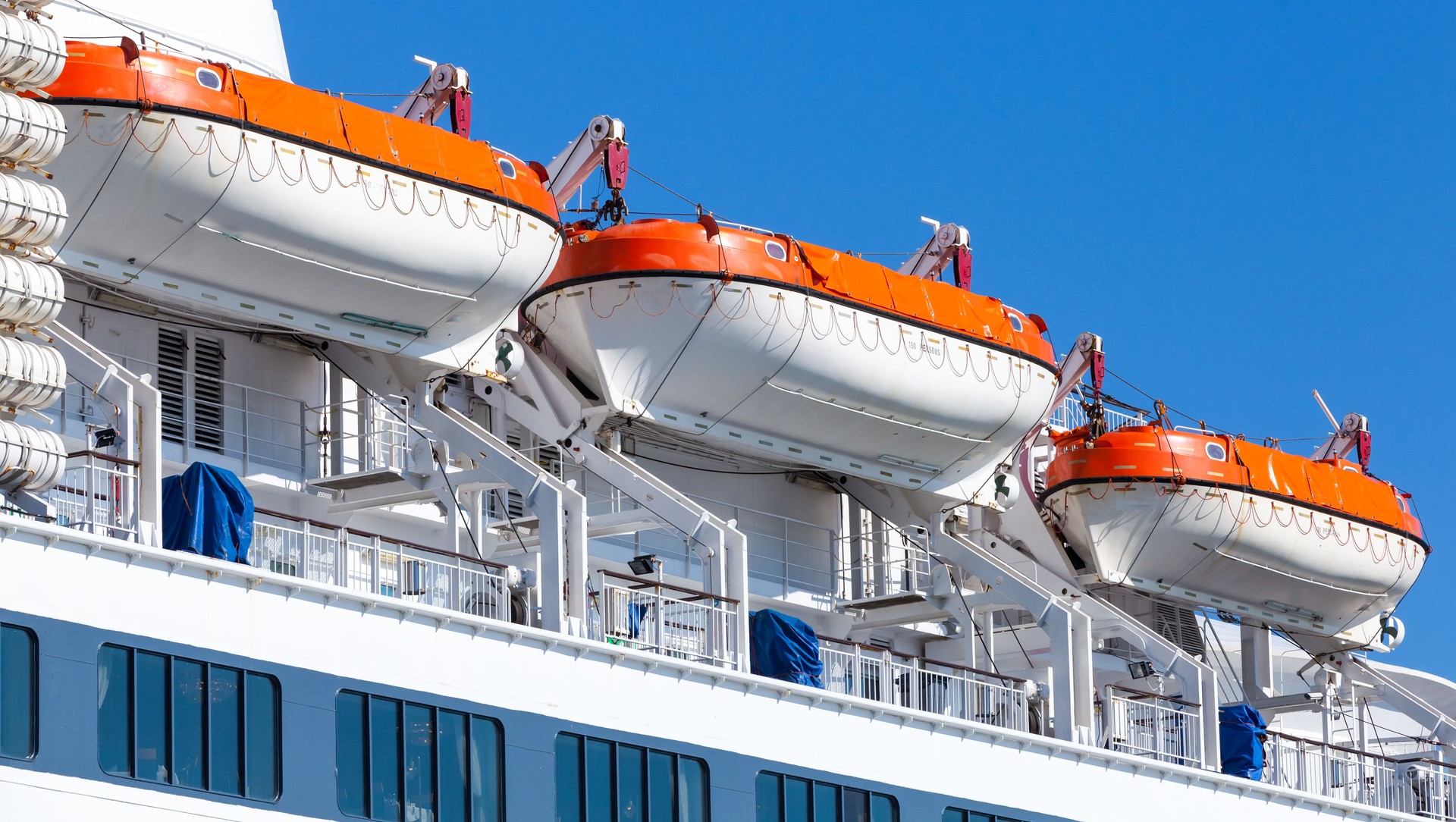
Main Types of Marine Lifeboats

Fully Enclosed Lifeboats
Evolving from open designs, these feature rigid canopies providing thermal protection and constructed with flame-retardant/non-combustible materials for fire safety. Occupants can operate launch systems and rowing gear while fully enclosed.
Canopy hatches secure in open positions for rapid boarding, meeting cargo ships' ≤3-minute full boarding requirement. The watertight structure prevents major flooding even when capsized, with bidirectional hatches enabling emergency escape.

Partially Enclosed Lifeboats
Feature rigid bow/stern canopies (≥20% hull length each) + foldable midsection covers for wind protection.
No self-righting capability; escape via hull exits with open-boat-style climbing aids
Non-watertight canopies require manual/auto bailing systems
Bailing efficiency directly impacts hull stability

Open Lifeboats
Lacking a fixed canopy, only accommodates temporary shelters with limited protection for occupants.
They are categorized by propulsion: motorized and non-motorized. Non-motorized versions lack engines but include oars, poles, sails, and mast rings.
The hull features mast seats with small rings and pulleys for securing mast support ropes, suitable for short-distance evacuation in calm sea conditions.
Our Lifeboat Product Series
Enclosed Lifeboats /Rescue Boats
Enclosed lifeboats excel in safety and adaptability, available in standard and fire-resistant models.
Capacity options include 26, 36, 39, 60, and 85-person configurations to meet various vessel requirements.

Free Fall Lifeboats
Free fall lifeboats are designed for rapid evacuation during emergencies.
Available in standard and fire-resistant versions with capacities of 16, 20, 26, and 32 persons, enabling quick personnel evacuation.

Fast Rescue Boats
Fast rescue boats feature high-speed response capabilities, specifically designed for emergency rescue missions.
With excellent maneuverability and powerful propulsion, they quickly reach rescue locations even in complex sea conditions, providing timely assistance to those in distress.

Lifeboat Construction and Regulatory Requirements
(1) Construction Materials
Marine lifeboats utilize various materials including wood, steel, aluminum alloy, and fiberglass (FRP). FRP lifeboats dominate current applications due to ease of manufacturing, low maintenance costs, and superior corrosion resistance.
(2) Structural Forms and International Standards
Lifeboats are structurally categorized as open, fully enclosed, or partially enclosed. Open models expose occupants to seawater in seas above 4-5, posing risks in extreme temperatures or direct sunlight.
Consequently, the "International Convention for the Safety of Life at Sea (SOLAS) 1974" mandates: passenger ships must equip partially or fully enclosed lifeboats; cargo ships and oil tankers require fully enclosed lifeboats to maximize emergency safety across vessel types.

Essential Lifeboat Equipment Checklist
Lifeboat emergency equipment must meet SOLAS requirements, ensuring prolonged seaworthiness and rescue capabilities, including these key categories:
(1) Navigation and Control Equipment
At least 4 buoyant oars with rowlocks or crutches secured to hull with short ropes or chains;
2 boathooks;
2 bow lines (length at least twice the distance from stowage position to lightest load line, minimum 15 meters), one connected to release mechanism and secured at bow, the other fixed near bow;
1 sea anchor, 1 anchor cable, and 1 anchor chain;
1 hand pump, 1 floating bailer, and 2 buckets.
(2) Communication and Signaling Equipment
4 rocket parachute flares, 6 hand flares, 2 floating smoke signals;
1 waterproof flashlight (with spare batteries and bulb in waterproof container) suitable for Morse communication;
1 daylight signaling mirror (with instructions for ship and aircraft communication);
1 whistle or equivalent sound signaling device;
1 searchlight with 6-hour total illumination (minimum 3 hours continuous use);
1 effective radar reflector.
(3) Survival and First-Aid Supplies
Fresh water in waterproof containers (3 liters per person, with 1 liter replaceable by desalination tablets);
Stainless steel water scoop (with short rope) and measuring cup;
Hermetically sealed food rations (minimum 10,000kJ per person in waterproof containers);
1 fishing kit, 1 sailor's knife secured to hull, 3 can openers;
Waterproof first-aid kit (with complete medical supplies);
6 doses of anti-seasickness medication per person and 1 sanitary bag;
2 thermal insulation devices (minimum 10% of rated capacity).
(4) Tools and Auxiliary Equipment
2 axes (one at bow, one at stern);
2 lifebuoys with ropes over 30 meters;
1 compass binnacle with luminous coating or appropriate lighting;
1 survival manual, 1 waterproof illustrated signal chart;
Small adjustment tools for the engine and accessories;
1 portable fire extinguisher suitable for oil fires.
Note: Except for boathooks (which may remain unfixed when supporting the lifeboat), all equipment must be secured in lockers, compartments, or other positions within the boat to prevent loss.
Lifeboat Selection Principles
Vessels should select emergency lifeboats and rescue boats based on navigation areas, vessel types, SOLAS conventions, classification society (ZC) regulations, and owner-specific requirements.
1. Cargo Ship Lifeboat Selection
When equipped with two fully enclosed lifeboats, cargo ships typically designate the starboard lifeboat as a dual-function rescue boat, reducing equipment costs. Side or rear door selection for fully enclosed lifeboats depends on hull side arrangements.
Free fall lifeboats, unable to serve as rescue boats, require additional dedicated rescue boats, making their overall configuration generally more expensive than two davit-launched lifeboats.
2. Passenger Ship Lifeboat Selection
Due to higher costs, passenger ships commonly use partially enclosed lifeboats; free fall lifeboats are prohibited. Selected partially or fully enclosed lifeboats can serve dual roles if meeting rescue boat performance requirements, optimizing equipment efficiency.

Connect with Us Today
For more information on lifeboat selection and safety,
contact LOCHAIN MARINE TECH experts